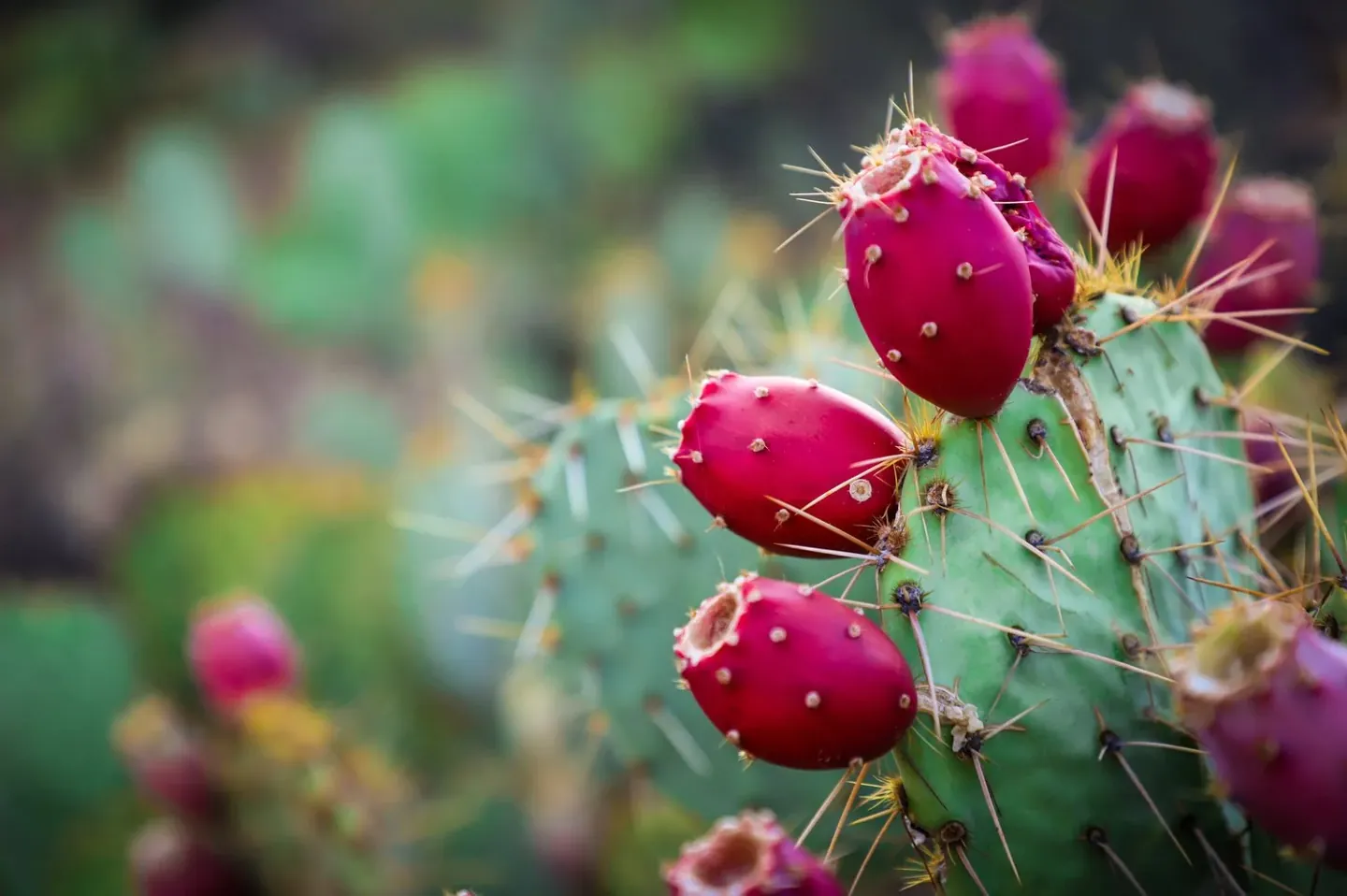
Prickly pear is one of the desert's most striking foods: jewel-toned fruit, soft pulp, and a flavor that welcomes lime. The fruit and the flat green pads, usually called nopales, come from the same cactus but have different culinary and nutritional roles.
A useful distinction
Small human studies have explored how cooked nopal pads affect blood sugar after a meal. Those findings cannot be carried over to prickly-pear juice, sweetened drinks, or concentrated extracts. Neither fruit nor pad is an established treatment for viral infections, colitis, obesity, or a hangover.
This cooler brings together the fruit, ginger, lime, and frozen raspberries. The sweeteners are optional so you can taste the cactus first and adjust the drink to the fruit's natural character.
Prickly-pear cooler
- 4 fresh prickly pears, professionally despined and carefully peeled
- 1 cup ice and 1 cup chilled water
- Juice of 2 limes
- One 1-inch piece of fresh ginger, peeled
- ½ cup frozen raspberries
- Optional: up to 1 tablespoon agave and 2 tablespoons raspberry syrup, to taste
Blend the peeled fruit with the water, lime, and ginger. Strain out the hard seeds if needed, then blend or stir with the ice. Taste before adding sweetener and finish with the frozen raspberries. Treat this as a fruit drink rather than a blood-sugar remedy.
A little preparation makes the drink easier
Work with fruit sold as ready for handling and eating, and follow the supplier's preparation advice. Wear suitable gloves if any spines may remain. Protect the work surface and clothing from the brightly colored juice. Once the flesh is ready, cut it into manageable pieces before blending so you can control the texture.
The seeds are a matter of preference as well as practicality. Straining makes a smoother cooler; leaving some pulp gives the drink more body. Do not claim the strained version has the same fiber content as whole fruit. If you want a softer ginger flavor, begin with a smaller piece, blend, then taste before adding the rest.
Serve it with a small flourish
Chill the glasses first if you have time. Divide the raspberries between them, pour in the drink, and finish with a thin lime slice. The fruit's color supplies most of the decoration. A pitcher of plain chilled water on the table gives everyone an easy way to adjust the intensity.
Keep the fruit cooler refrigerated and make it close to serving. The recipe is a drink to share with a meal, not a replacement for one. For a different day, explore cooked nopales in a savory dish from a knowledgeable recipe source; their texture and use are quite different from this sweet fruit preparation.
Buy fruit prepared for eating; tiny cactus glochids can be difficult to see and painful to remove. If you manage diabetes, count the drink within your usual eating plan and avoid adding cactus extracts without checking how they fit with your medicines.
Put it into practice
Naturopathic foundations
How can prickly pear fit into a varied way of eating?
Choose properly prepared fruit or pads and introduce them in a meal that already works for you. Enjoy the texture and flavor alongside other plants and a protein source. Let the whole pattern, rather than a single ingredient, carry the nutritional plan.
Functional tests to consider
Eating well begins on the plate. If you are also investigating metabolic risk, these tests can help put the longer-term pattern in context.
HbA1c & fasting glucose
These help evaluate blood-sugar patterns when metabolic risk, increased thirst, frequent urination, or other clinical clues warrant testing. A1c gives a longer view; a fasting glucose is a point-in-time measurement. Anemia and other conditions can affect A1c.
Lipid panel, with ApoB when useful
For a cardiovascular or longevity review, begin with the lipid pattern and the whole risk picture. ApoB can add information in selected situations, particularly when triglycerides or metabolic risk complicate the picture. It is not a test of whether one food is working.
A mind–body practice
The first three bites
Put the screen away and place both feet on the floor. Before eating, notice the color and scent of the food. Take the first three bites slowly enough to notice their texture, then check in with hunger and comfort.
A little more clarity
Can a single food replace a whole-food eating pattern?
No single ingredient has to carry the whole meal. Look for enough food, a source of protein, varied plants, and a pattern that fits your life. Laboratory results describe specific health questions, not the virtue of an individual food.
For education and reflection. Individual needs vary. For persistent symptoms or personal guidance, seek additional care from a qualified clinician or appropriate specialist.
References
- The effect of nopal on postprandial blood glucose after two different breakfasts (2014) · Small human meal study