
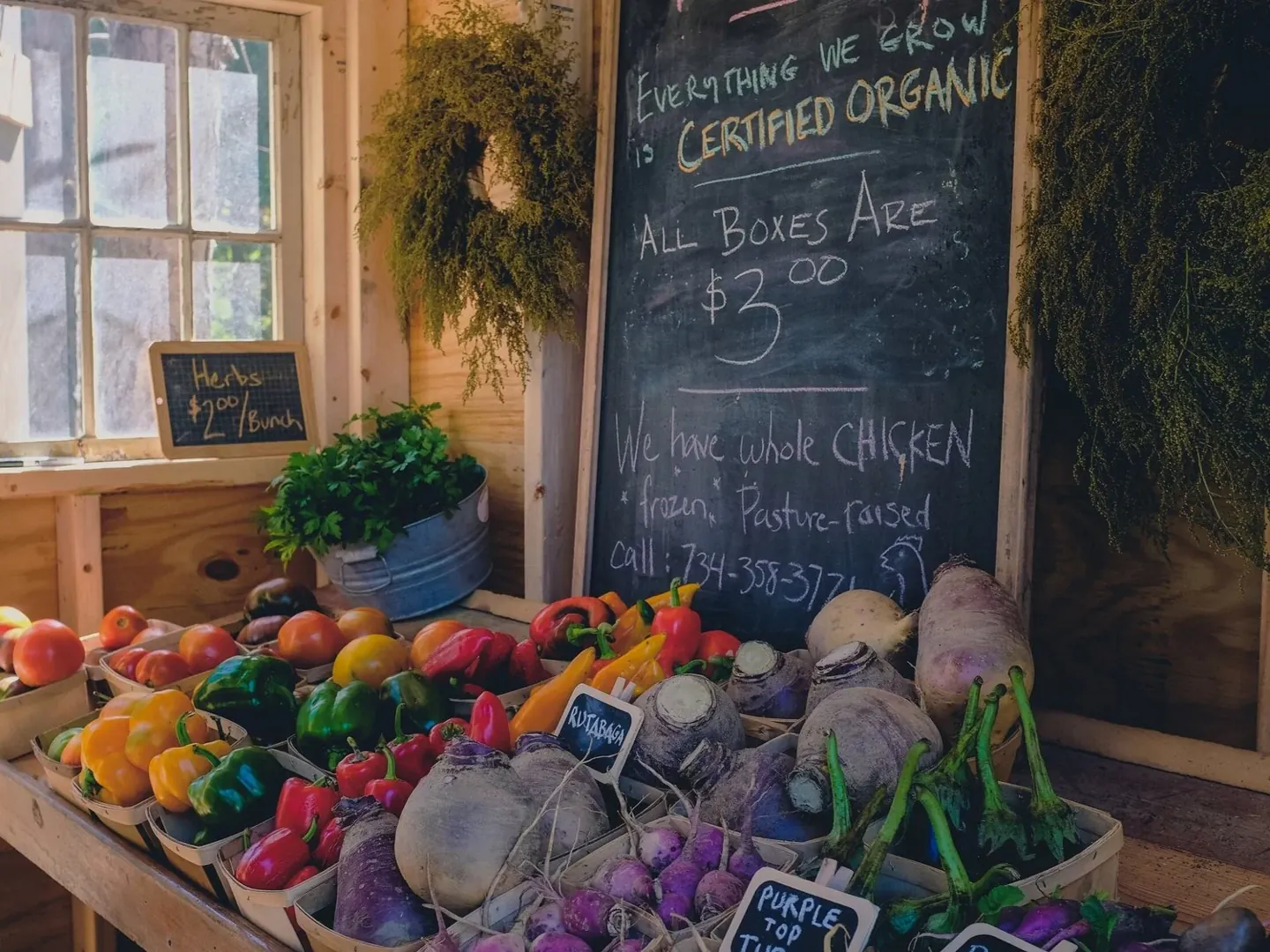
Sunday afternoon at the farmers’ market has long been a favorite ritual, especially when the dahlias are out. There is something grounding about buying food among the colors, conversations, and small surprises of a season.
The market does not need to become an exercise in perfect shopping. Think of it as inspiration for a few meals you will actually enjoy making.
Shop for the week you have
Choose one sturdy vegetable, one leafy thing, and a fruit that looks especially good. In autumn, that might mean a squash, a bunch of greens, and a bag of apples. Add onions or carrots for a soup, and something small for pleasure: flowers, a fragrant herb, or a handful of fresh walnuts.
Ask growers what is abundant and how they like to cook it. A familiar ingredient can feel new with a different preparation. Roast cabbage wedges, shave fennel into a salad, or warm sliced apples with cinnamon.
Turn the basket into three meals
Before buying another beautiful vegetable, imagine where it will go. A squash can become roasted wedges tonight, a grain-bowl component tomorrow, and soup later in the week. A bunch of herbs can finish all three. That kind of overlap keeps the shopping pleasurable without turning the refrigerator into a collection of good intentions.
Choose one flexible foundation
Cook a pot of beans or grains, or keep a protein you enjoy ready to use. The market produce then becomes a changing accompaniment instead of demanding a completely different recipe every night. A lemon, good olive oil, and a simple dressing can carry several meals.
Leave a little of the budget and basket space unassigned. The unexpected find—a particularly fragrant pear, a bunch of dahlias, a vegetable you have not cooked before—is part of the point. Ask one question, buy an amount you can comfortably use, and let curiosity lead a single dish rather than the whole week.
Let freshness be practical
Seasonal produce can be flavorful and encourages variety, but local does not always mean more nutritious or lower in environmental impact. Growing methods, transport, refrigeration, and waste all matter. Frozen produce and ordinary supermarket vegetables can fit beautifully into the same kitchen.
Put delicate leaves where you will see them, use ripe fruit first, and give sturdy roots a later place in the week. Wash produce under running water before preparing it. A market visit becomes more nourishing when what you bring home makes it onto the plate.

Put it into practice
Naturopathic foundations
How can a farmers-market visit turn into meals I actually eat?
Choose a few versatile ingredients and connect them to meals you already know. Add a protein source and enough pantry staples to complete the week. Let seasonal inspiration make eating easier, rather than fill the refrigerator with another set of obligations.
Functional tests to consider
Eating well begins on the plate. If you are also investigating metabolic risk, these tests can help put the longer-term pattern in context.
HbA1c & fasting glucose
These help evaluate blood-sugar patterns when metabolic risk, increased thirst, frequent urination, or other clinical clues warrant testing. A1c gives a longer view; a fasting glucose is a point-in-time measurement. Anemia and other conditions can affect A1c.
Lipid panel, with ApoB when useful
For a cardiovascular or longevity review, begin with the lipid pattern and the whole risk picture. ApoB can add information in selected situations, particularly when triglycerides or metabolic risk complicate the picture. It is not a test of whether one food is working.
A mind–body practice
The first three bites
Put the screen away and place both feet on the floor. Before eating, notice the color and scent of the food. Take the first three bites slowly enough to notice their texture, then check in with hunger and comfort.
A little more clarity
Can a single food replace a whole-food eating pattern?
No single ingredient has to carry the whole meal. Look for enough food, a source of protein, varied plants, and a pattern that fits your life. Laboratory results describe specific health questions, not the virtue of an individual food.