Chia's most useful trick happens in a bowl: give the seeds enough liquid and they make a soft, spoonable gel. That texture is an easy way to add variety to breakfast, especially when oats, fruit, and yogurt have begun to feel predictable.
What the seeds bring
Chia provides fiber, plant protein, and alpha-linolenic acid, or ALA, a plant omega-3 fat. ALA is an essential nutrient, but the body converts only a limited amount into EPA and DHA. Chia therefore has a different role from foods that supply those longer-chain omega-3s directly.
The seeds also contain minerals. None of that makes them a proven treatment for inflammation, memory problems, or weight loss. Their practical value is simpler: they can help make a meal more varied and substantial.
A breakfast to prepare ahead
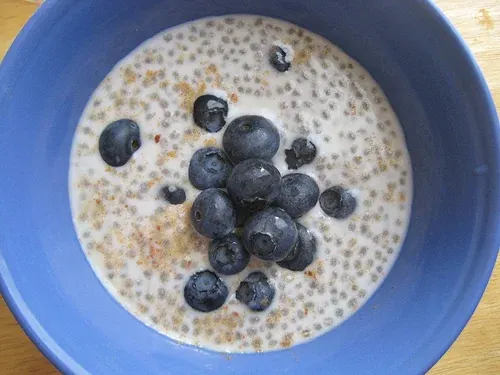
Stir a modest spoonful into a generous amount of milk or a preferred milk alternative. Stir again as the mixture thickens, then refrigerate until fully hydrated and spoonable. Adjust the liquid to the texture you like, and add fruit, cinnamon, or chopped nuts before eating. You can also mix hydrated chia into porridge or yogurt.
Make the texture work for you
Some people love chia's soft, bead-like texture; others prefer it folded into something familiar. There is no reason to force a bowl of plain pudding if a spoonful in oats feels more appealing. Begin with the version you would actually want for breakfast.
For a simple pudding
Use a tested recipe or the package's suggested ratio as your starting point. Stir thoroughly, wait a little, and stir again before refrigerating to discourage clumps. Add more liquid if the result is too dense. Keep the mixture refrigerated and follow the storage limits of the milk or other ingredients you use.
For a softer introduction
Prepare the chia separately with enough liquid to hydrate fully, then stir a small amount into porridge or yogurt. Add ripe fruit for sweetness and a little cinnamon or vanilla if you like. This lets you adjust the texture without committing the whole meal to a new ingredient.
Chia is one option among many. Oats, nuts, seeds, legumes, and other whole foods can all contribute to a satisfying day of eating in different ways. A useful pantry earns its variety through foods you enjoy, rather than a list of ingredients you feel obliged to include.
Increase fiber gradually if your digestion is sensitive. Never swallow a dry spoonful of chia and then chase it with water: the seeds expand and can lodge in the esophagus, particularly if you have swallowing difficulties. Enjoy them hydrated and mixed into food.
Salvia hispanica is associated with Mexico and Central America, including longstanding Mesoamerican food traditions. That history adds context while you find your own everyday way to eat the seeds.
Put it into practice
Naturopathic foundations
How can I make chia a comfortable part of breakfast?
Give chia enough liquid to soften and begin with an amount that suits your digestion. Add it to a meal with enough protein and substance. Changes in fiber are easier to understand when you make them gradually and keep fluids accessible.
Functional tests to consider
Eating well begins on the plate. If you are also investigating metabolic risk, these tests can help put the longer-term pattern in context.
HbA1c & fasting glucose
These help evaluate blood-sugar patterns when metabolic risk, increased thirst, frequent urination, or other clinical clues warrant testing. A1c gives a longer view; a fasting glucose is a point-in-time measurement. Anemia and other conditions can affect A1c.
Lipid panel, with ApoB when useful
For a cardiovascular or longevity review, begin with the lipid pattern and the whole risk picture. ApoB can add information in selected situations, particularly when triglycerides or metabolic risk complicate the picture. It is not a test of whether one food is working.
A mind–body practice
The first three bites
Put the screen away and place both feet on the floor. Before eating, notice the color and scent of the food. Take the first three bites slowly enough to notice their texture, then check in with hunger and comfort.
A little more clarity
Can a single food replace a whole-food eating pattern?
No single ingredient has to carry the whole meal. Look for enough food, a source of protein, varied plants, and a pattern that fits your life. Laboratory results describe specific health questions, not the virtue of an individual food.
For education and reflection. Individual needs vary. For persistent symptoms or personal guidance, seek additional care from a qualified clinician or appropriate specialist.
References
- NIH ODS: Omega-3 Fatty Acids · Authoritative evidence and safety guidance
- American College of Gastroenterology: Esophageal Impaction with Chia Seeds (2014) · Primary case presentation and professional safety advice