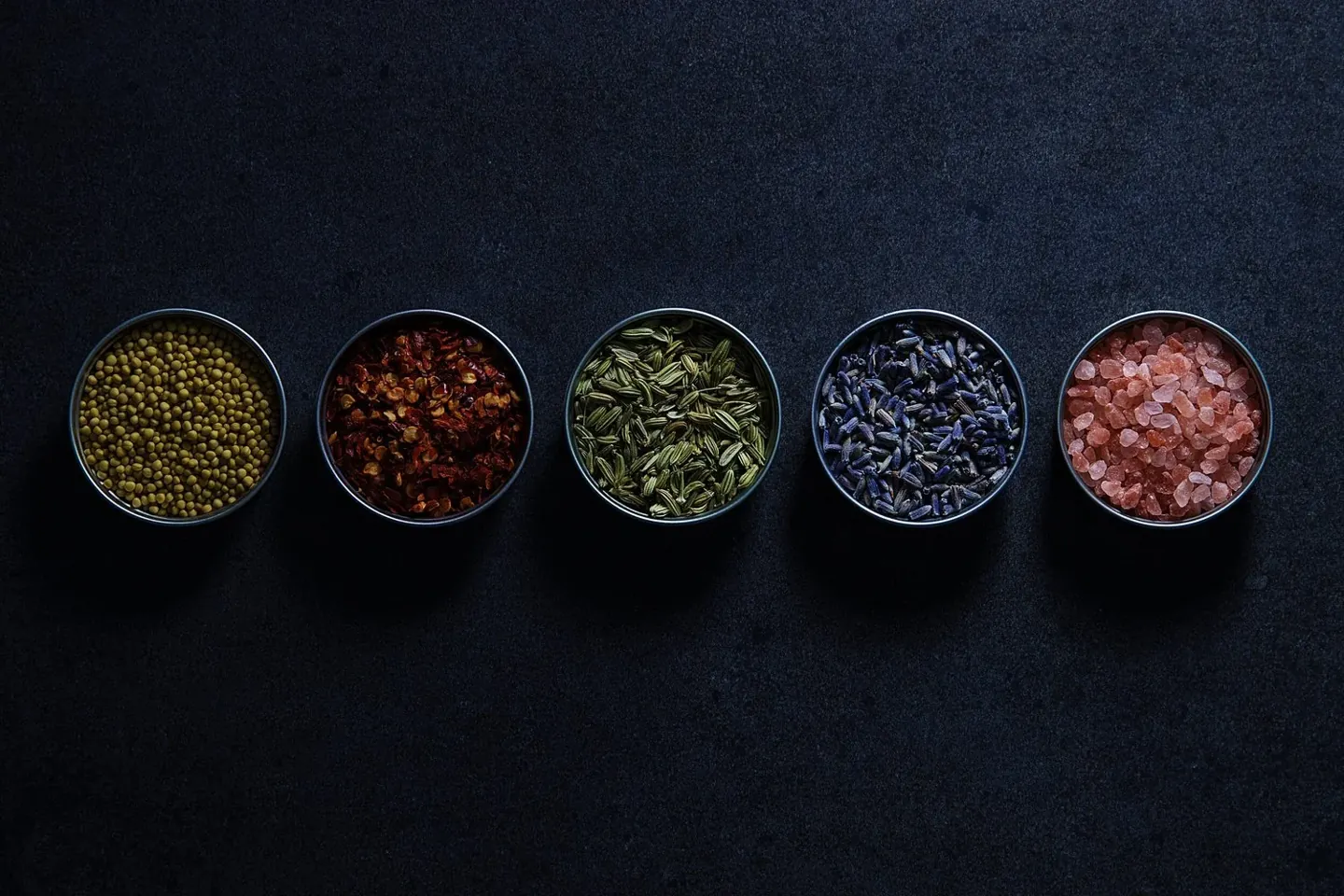
A spice drawer is a small botanical collection: roots, leaves, fruits, and seeds gathered for their flavor. Cayenne, turmeric, and oregano have long histories of culinary and traditional use. The most dependable way to enjoy them is also the simplest—cook with them.
Cayenne: a little heat
Add a pinch to beans, tomato soup, or roasted vegetables. Capsaicin, the compound responsible for much of the heat, is also used in specifically formulated topical pain products. That does not make a homemade pepper paste a safe equivalent. Keep cayenne away from eyes and sensitive skin, wash your hands after handling peppers, and use less if it aggravates reflux.
Eating cayenne is not a proven way to prevent blood clots. Claims about circulation or cholesterol should never be translated into self-treatment for chest pain or vascular disease.
Turmeric: earthy and golden
Turmeric works beautifully in lentils, rice, soups, and eggs. Curcumin, one of its constituents, is being studied for several conditions, but research using concentrated extracts cannot tell us what a sprinkle in dinner will accomplish. Current evidence does not establish turmeric as a treatment for Alzheimer’s or Parkinson’s disease.
Food amounts and concentrated supplements have different risk profiles. Some enhanced-absorption turmeric or curcumin products have been associated with liver injury. If a supplement is followed by dark urine, jaundice, nausea, or unusual fatigue, stop it and seek care. A more absorbable product is not automatically a better one.
Make a three-spice supper
A pot of beans is an easy place to explore all three. Soften onion in a little oil, add a small pinch of turmeric and cayenne, then stir in cooked beans and enough water or broth to make the texture you like. Add oregano toward the end, taste, and finish with something bright such as lemon or vinegar. Start with less spice than you think you need; it is easier to build flavor than take heat away.
Adjust the character, not the promised benefit
For a gentler meal, leave out the cayenne and let turmeric provide the earthiness. For a tomato-based dish, make oregano the main note and use only a trace of the others. Fresh oregano can be lively and assertive; dried oregano has a different, concentrated character. There is no requirement to use all three together.
Spice jars are also worth a small seasonal edit. Open each one and notice the aroma. Store them away from the hottest part of the kitchen, keep moisture out, and buy quantities you will actually use. Good labeling helps distinguish a culinary powder from a concentrated extract that happens to have the same plant on the front.
Let taste guide the experiment. A meal that is satisfying enough to cook again has a practical advantage over a “medicinal” dish you force down once. The point is to make everyday food more inviting, with plant traditions adding interest and research adding perspective.
Oregano: let flavor do the work
Use fresh leaves in a tomato salad or dried oregano in a pot of beans. Laboratory antioxidant comparisons do not translate into a clinical ranking of foods, and antimicrobial activity in a dish does not prove that oregano treats an infection in a person. Oregano essential oil is far more concentrated than a kitchen herb and should not be casually swallowed or applied neat to skin.
Think of these plants as ways to make nourishing meals more inviting. Their aroma, color, and pleasure are enough reason to keep them close.
References & further reading
- Turmeric: Usefulness and Safety — NCCIH · government evidence and safety summary
- Aromatherapy — FDA · regulatory safety guidance
For education and reflection. Individual needs vary. For persistent symptoms or personal guidance, seek additional care from a qualified clinician or appropriate specialist.